

Learning Disability Evaluations for Students
When learning challenges create questions, our nationally certified evaluation specialists provide answers that make a difference.




Trusted by K-12 Public and Private Schools Nationwide
Accepted by 550+ Universities & Colleges
21+ years of Expertise
Serving all 50 states

Comprehensive Psychoeducational Evaluations for K–12 Students
Our psychoeducational evaluations are designed to uncover the root causes of learning and attention difficulties that may be impacting a student’s progress in school.
Rather than focusing on test scores alone, we take an in-depth look at how your child thinks, learns, and processes information to identify whether challenges are related to a specific learning disability—such as dyslexia, dysgraphia, or dyscalculia—or attention-related concerns like ADHD.
5 to 15%
It’s estimated that 5 to 15% of school-aged children of school-aged children struggle with a learning disability, and nearly 80% of them experience reading challenges like dyslexia.
1 in 3
One-third of students with a learning disability are also diagnosed with ADHD. Many children with learning difficulties also have coexisting conditions like ADHD.
What Our Assessments Measure
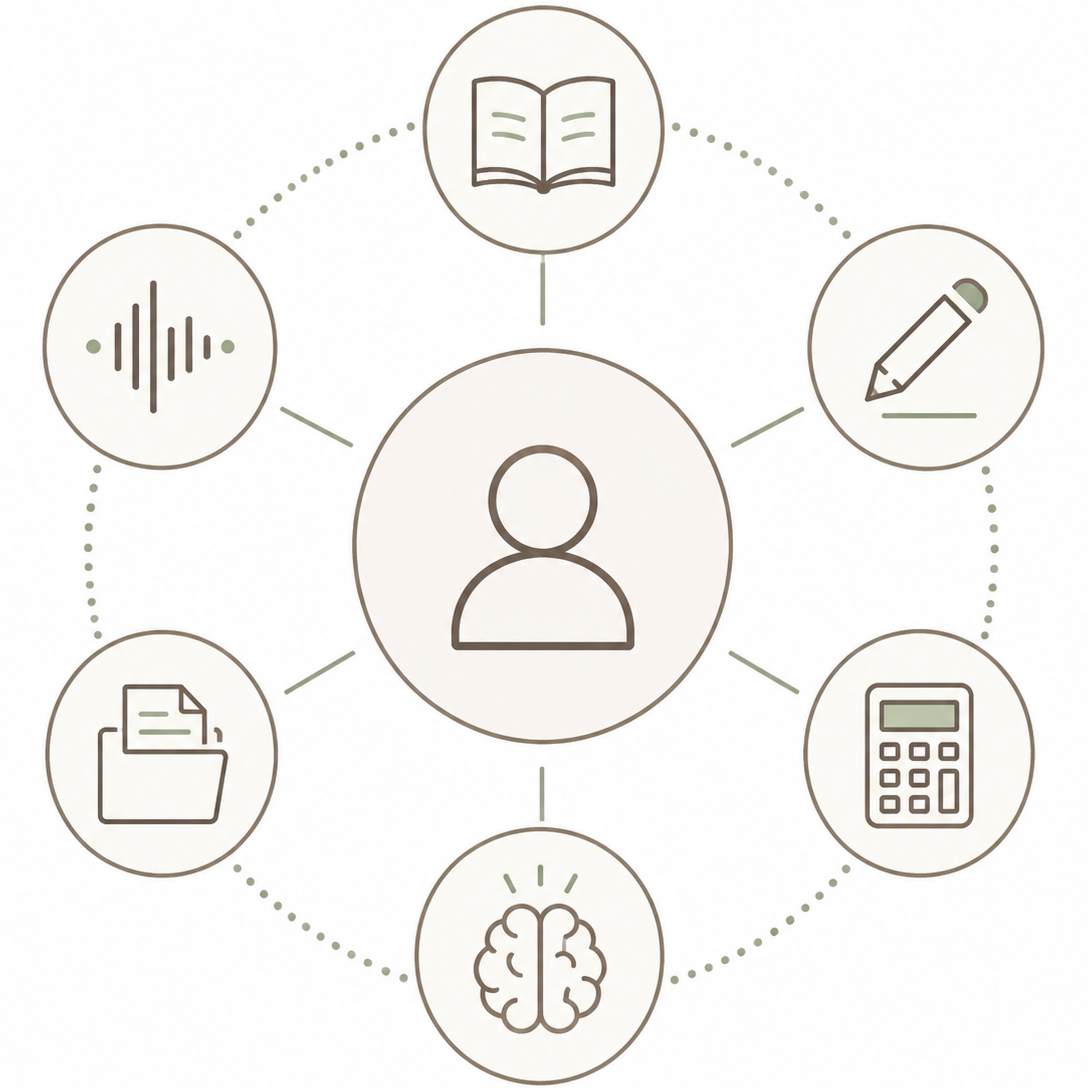
Our comprehensive evaluation examines key areas of learning and cognition, including:
Attention and Focus
Evaluating for ADHD and attention-related challenges that affect classroom performance.
Learning Disabilities
Identifying dyslexia (reading), dysgraphia (writing), and dyscalculia (math) to clarify academic needs.
Memory
Assessing short-term and long-term memory skills essential for comprehension and retention.
Visual and Auditory Processing
Understanding how the brain interprets information through sight and sound.
Problem-Solving & Processing Speed
Measuring reasoning, cognitive flexibility, and how efficiently information is understood.
Academic Skills
Measuring foundational reading, writing, and math abilities to identify areas for targeted support.
Why Our Approach Works
Our evaluations are part of a comprehensive psychoeducational assessment, not a single-skill screening. We look closely at reading, phonemic awareness, writing, math, attention, memory, processing, and learning history to better understand what may be impacting a student’s academic progress.
By looking at the whole child—not just one score—we provide accurate diagnoses, clear answers, and recommendations families can use to support success in school and beyond.
After the Evaluation: Creating a “Road Map” for Success
Let us help you become the expert in your child’s learning
Within 10 to 14 working days, families meet with a Diagnostic Learning Services Director to review findings. During this meeting, we explain the results in clear, practical terms and walk through recommendations that can be shared with schools and support professionals.
Your report becomes a powerful tool that helps families advocate confidently and helps schools implement appropriate supports.
What Families Receive:
A clear explanation of evaluation results
Recommendations for school and home support
Documentation that can support advocacy
Guidance on possible interventions and resources