

ADHD Evaluations College Students and Adults
Do You Struggle with Distraction, Procrastination, Time Management or Organization That Impacts Your Daily Functioning?
Why Our Approach Works
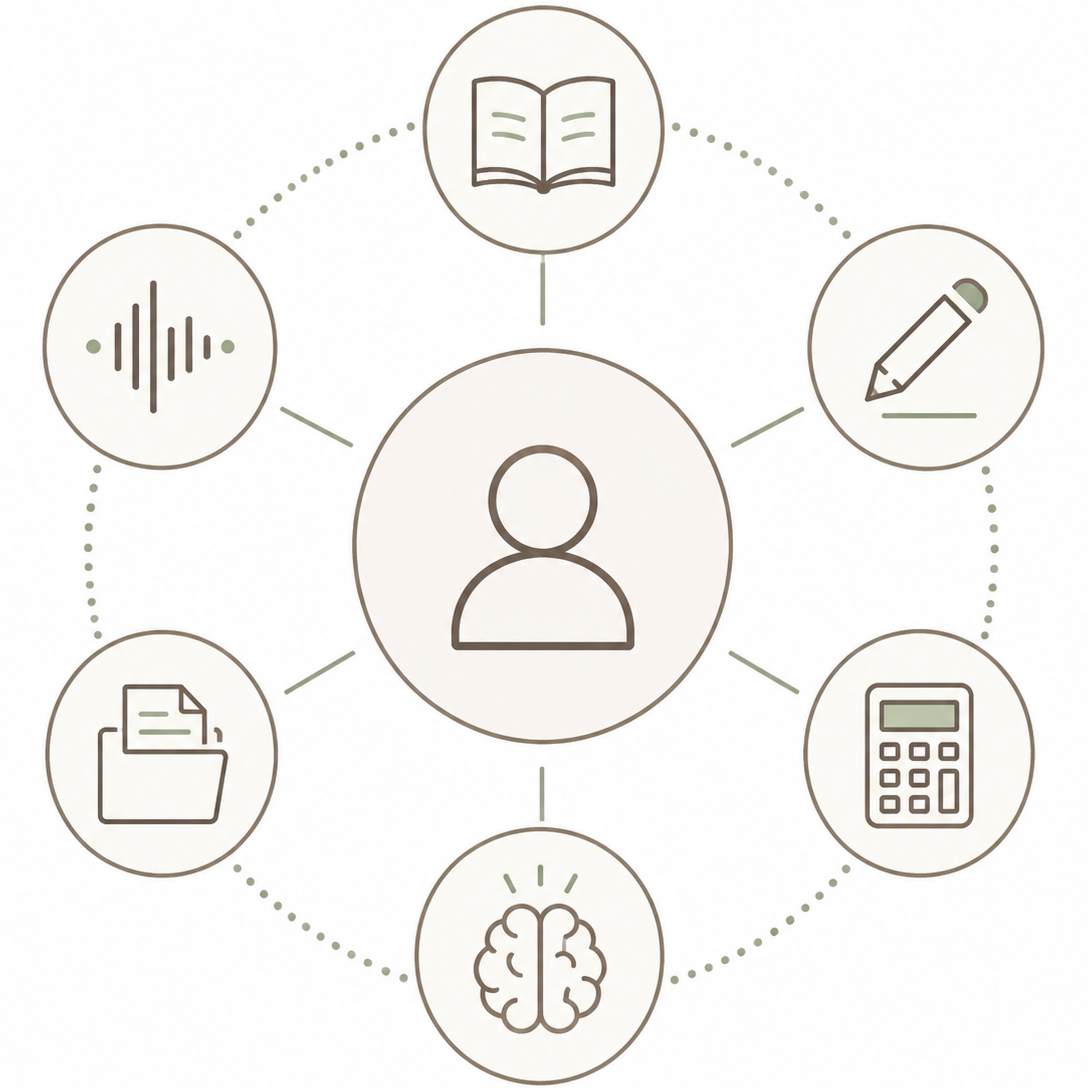
Our ADHD evaluations are part of a comprehensive psychoeducational assessment, not a single-skill screening. We look closely at reading, phonemic awareness, writing, math, attention, memory, processing, and learning history to better understand what may be impacting progress.
By looking at the whole person—not just one score—we provide accurate diagnoses, clear answers, and recommendations you can use to support success in school, work and beyond.
After the Evaluation: Creating a “Road Map” for Success
Let us help you become the expert in your own success—at school, work, and beyond.
Within 10 to 14 working days, you’ll meet with a Diagnostic Learning Services Director to review the results. During this meeting, the director explains findings and recommendations in clear, practical terms and walk through recommendations that can be shared with schools, employers, etc.
Your written report becomes a valuable tool you can use to:
• Request college disability accommodations,
• Share documentation with professors or employers,
• Support standardized testing accommodation requests, and
• Build a personalized plan for ongoing success.

What is ADHD?
ADHD (Attention-Deficit/Hyperactivity Disorder) is a neurodevelopmental condition that affects attention, organization, self-control, and executive functioning. While ADHD often begins in childhood, many adults discover it later—after years of feeling disorganized, overwhelmed, or “always behind.”
ADHD is not caused by lack of effort or desire to do things. It is linked to brain-based differences and genetics. With the right strategies, supports, and accommodations, adults with ADHD often see major improvements in productivity, emotional regulation, and quality of life.

Note: Historically, ADD and ADHD were considered separate diagnoses, with ADD describing inattentive symptoms and ADHD describing hyperactive symptoms. Today, ADD is no longer a recognized diagnosis. ADHD is the current diagnosis and includes three presentations: Inattentive, Hyperactive/Impulsive, and Combined.
There are 3 types of ADHD
What are the signs and symptoms of each type?
Predominantly Inattentive Type
Misses details / careless mistakes
Difficulty sustaining attention
Seems not to listen
Doesn’t follow through on instructions
Disorganization
Avoids sustained mental effort
Loses things
Easily distracted
Forgetful in daily activities
Predominantly Hyperactive/Impulsive Type
Fidgets/squirms
Difficulty staying seated
Restlessness
Difficulty playing quietly
“Driven by a motor”
Talks excessively
Blurts answers
Difficulty waiting/turn-taking
Interrupts or intrudes
Combined Type
Meets criteria for both inattentive and hyperactive and/or impulsive patterns.
ADHD Evaluation Options for Adults
Diagnostic Learning offers two evaluation options for adults seeking ADHD testing:
This evaluation specifically assesses attention and focus-related processing skills using subjective and objective measures.
This option is for diagnosis and treatment purposes only.
Duration: approximately 1.5–2 hours
Includes symptom inventories that may be sent to family or close contacts
Provides documentation for ADHD treatment, but does not meet accommodation requirements.
Focused ADHD Evaluation (For Treatment Only)
This in-depth adult ADHD evaluation examines attention, executive functioning, impulsivity, hyperactivity, processing speed, and cognitive functioning. It also includes screening for underlying mental health factors such as anxiety or depression.
This is the best option if you need formal documentation for accommodations.
Duration: approximately 3.5–4 hours
Includes subjective + objective measures
Provides documentation for:
ADHD treatment support
College accommodations
Standardized testing accommodations (GRE, LSAT, MCAT, licensing exams)
Comprehensive ADHD Evaluation (For Accommodations + Treatment)

The Qb Check
As part of both adult ADHD evaluation options, we may use the Qb Check—an FDA-approved computer-based assessment that measures attention, impulsivity, and activity levels in real time.
By combining Qb Check results with symptom surveys, behavioral observations, and additional assessment tools, we provide a more objective and accurate understanding of how ADHD may be affecting you.